
Why Does My House Smell Musty?
How to Find and Fix Stale Odors
Guide to Identifying Hidden Moisture, Animal Intrusion, and Ventilation Problems
Have you ever walked into your home after being away for a few days and noticed a stale or musty smell? Perhaps the odor is strongest in a particular room, closet, basement, or attic. Or maybe you’ve become accustomed to the smell, but visitors notice it immediately.
A persistent musty smell is worth investigating. It may be an early warning sign of a moisture problem, hidden mold, animal activity, or another issue that deserves attention.
The good news is that many of these problems can be identified with a little detective work.
The key is to find and eliminate the source of the odor rather than simply covering it up.
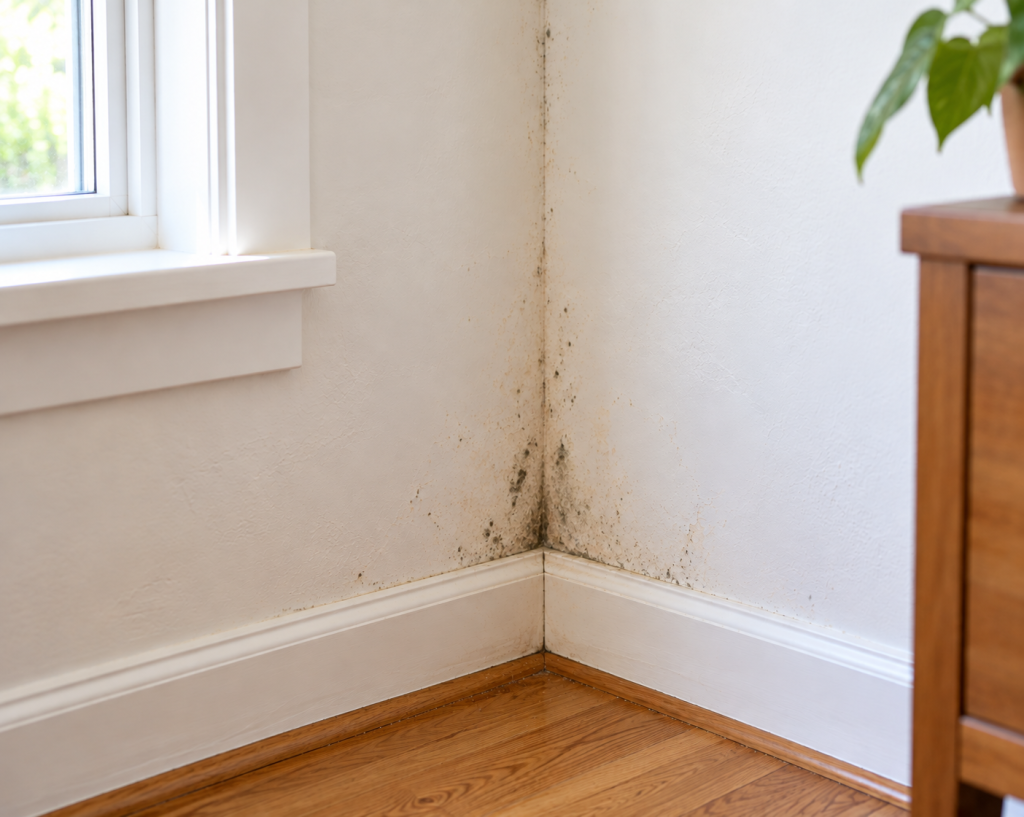
1. Moisture: The First Place to Investigate

Moisture is one of the most important causes to investigate when your home develops a musty smell.
Many homeowners immediately suspect a leaking roof or plumbing pipe. While leaks are certainly possible, moisture can also accumulate without any water entering your home from outside.
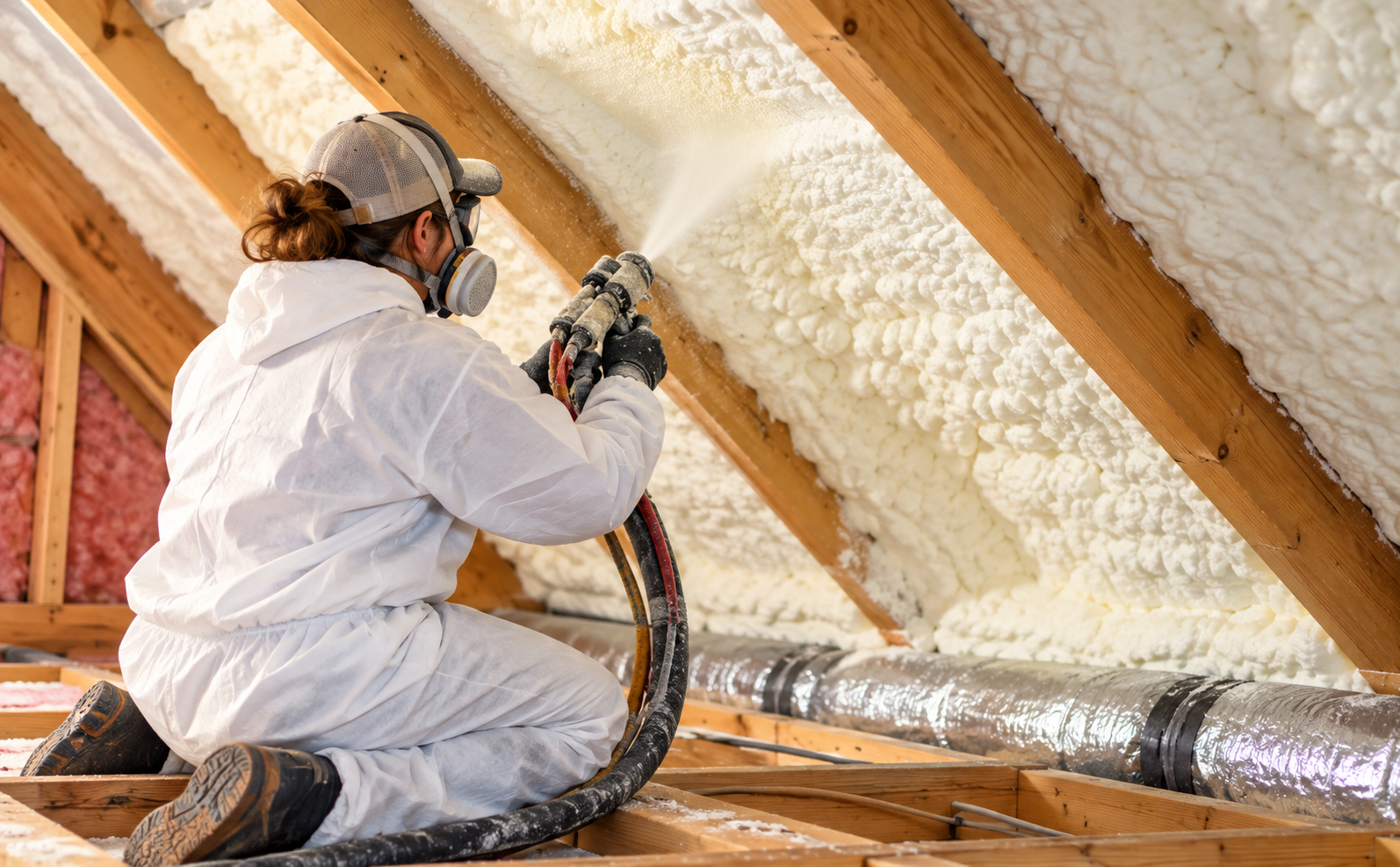
Hidden Condensation from Insufficient Insulation
This is a commonly overlooked problem, particularly in older homes.
During the winter, indoor air is warm and contains water vapor. When that air encounters a sufficiently cold surface, moisture can condense.
Think about a cold glass of water on a humid summer day. Water droplets form on the outside of the glass because its surface temperature is below the dew point of the surrounding air.
The same thing can happen inside your home.
Areas with missing or insufficient insulation can become cold enough for condensation to form. Common locations include:
- Anywhere furniture or boxes are pushed against an exterior wall
- Underside of roof sheathing
- Rim joists around the perimeter of basements
- Poorly insulated wall and ceiling cavities
- Areas around windows and doors
- Under and around cold water piping on humid summer days
This is especially problematic when warm, humid indoor air leaks into cold wall or attic cavities through gaps around plumbing, wiring, recessed lights, or other penetrations.
Improving insulation and sealing air leaks can help prevent condensation on cold surfaces. For practical steps to make your home more comfortable and energy-efficient, see our Home Hero Winterization Guide.
Over time, repeated condensation can dampen wood, insulation, drywall, and other materials, creating conditions for mold growth and musty odors.
Home Hero Tip: If the musty smell is noticeably worse during winter, investigate cold surfaces, missing insulation, air leaks, and indoor humidity.
Humidifiers Can Make the Problem Worse
Humidifiers can make winter air more comfortable, but excessive indoor humidity can cause moisture to condense on cold surfaces.
The EPA recommends keeping indoor relative humidity below 60%, ideally between 30% and 50%. In very cold weather, some homes need even lower humidity to prevent condensation.
An inexpensive digital hygrometer can help you monitor humidity levels throughout your home.
If you notice condensation on windows, walls, or other cold surfaces, reduce indoor humidity and investigate the source.
Plumbing and Exterior Water Leaks
Of course, traditional water leaks are another important possibility.
Look for:
- Water stains on ceilings and walls
- Peeling or bubbling paint
- Soft or swollen baseboards
- Damp carpet or flooring
- Moisture under sinks and around toilets
- Wet insulation
- Water entering around foundations or basement windows
- Overflowing gutters or downspouts discharging too close to the foundation
Don’t overlook slow leaks. A small leak concealed inside a wall can cause significant damage before visible staining appears.
Home Hero Tip: If you suspect a leak, take photographs and record when the problem occurs. Consider marking the perimeter of the moisture mark with a pencil and date to track expansion over time. Does the smell become stronger after heavy rain? After someone showers? When the air conditioning runs? These patterns can help identify the source.
2. Basements: Humidity, Groundwater, and Stored Materials
Basements deserve special attention because they are naturally cooler and often more humid than the rest of the home.
During the summer, warm humid outdoor air can enter a cool basement. As the air cools, its relative humidity rises, sometimes resulting in condensation on cold surfaces.
Other common moisture sources include:
- Groundwater seeping through foundation walls
- Water entering through cracks
- Poor exterior grading and drainage
- Condensation on cold water pipes
- Damp concrete floors
- Poorly maintained dehumidifiers
- Cardboard boxes, carpeting, fabrics, and other absorbent materials can retain moisture and develop musty odors.
What You Can Do
- Monitor basement humidity with a hygrometer.
- Use a properly sized dehumidifier when necessary.
- Consider a dehumidifier with a built-in pump or continuous drain so you don’t have to remember to empty the bucket.
- Insulate cold water pipes that collect condensation.
- Keep cardboard boxes and other moisture-sensitive materials off basement floors.
- Make sure gutters and downspouts direct rainwater away from the foundation.
- Investigate any recurring dampness or water intrusion.
Home Hero Tip: Opening basement windows during hot, humid summer weather can actually make moisture problems worse. Bringing humid outdoor air into a cool basement may increase condensation rather than reduce it.
3. Animal Intrusion: An Often-Overlooked Source of Odors
Have you ever had mice, squirrels, bats, or other animals in your attic, basement, or walls?
Even after the animals are gone, their nesting materials, urine, droppings, and other debris can continue producing unpleasant odors.
In some cases, animal activity may have occurred years earlier.
Where to Investigate
Common locations include:
- Attics
- Knee walls and unfinished storage spaces
- Basement ceilings
- Wall cavities
- Areas around plumbing penetrations
- Chimneys and unused flues
- HVAC ductwork
Signs of animal activity may include scratching sounds, droppings, disturbed insulation, gnaw marks, chewed wiring, and nesting materials.

Why Sealing the Entry Points Isn't Enough
Preventing animals from entering your home is essential, but it may not eliminate existing odors.
Contaminated insulation and nesting materials may need to be removed, and affected areas may require professional cleaning.
Stored boxes and bins can make the problem more difficult to locate. Clearing access to the affected area may be necessary, but avoid disturbing suspected contaminated materials before determining appropriate safety precautions.
Important Safety Note: Never dry-sweep or vacuum rodent droppings or nesting materials. This can release potentially infectious particles into the air. Follow CDC cleanup recommendations, and use a qualified professional for extensive contamination. Bat-related contamination also warrants specialist assessment. Learn more at: CDC’s Rodent Cleanup Guide
Home Hero Tip: When hiring a pest company, ask whether their services include locating and removing contaminated nesting materials and insulation, not just trapping animals and sealing entry points.
4. Heating, Cooling, and Ventilation Systems
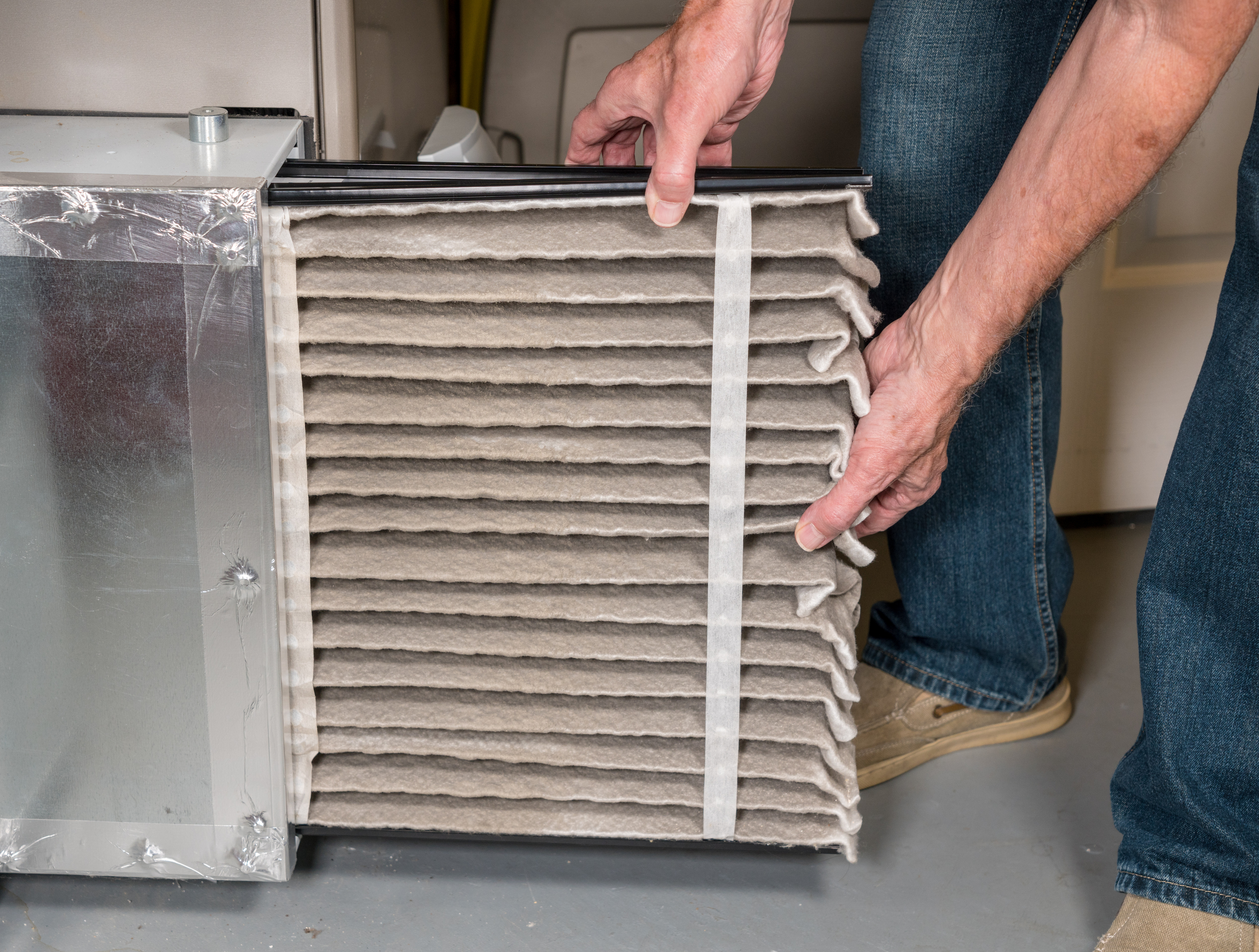
Your home’s HVAC system can also contribute to stale or musty odors.
Potential causes include:
- Clogged air-conditioning condensate drains
- Standing water in condensate pans
- Mold growth on damp HVAC components
- Dirty or wet filters
- Moisture-damaged duct insulation
- Poorly ventilated bathrooms or laundry areas
If the smell becomes stronger when your heating or cooling system turns on, that is an important clue.
What You Can Do
Check accessible HVAC filters and look for signs of water around the air handler.
Have an HVAC professional investigate recurring condensate drainage problems, moisture-damaged equipment, or odors originating inside the system.
Bathroom exhaust fans should vent outdoors and should be used during showers and afterward to remove excess moisture.
Kitchen range hoods that exhaust outdoors can also help remove moisture generated during cooking.
Don’t Forget Your Dryer Vent
Clothes dryers produce significant moisture, which should be exhausted directly outdoors. A disconnected, damaged, or improperly installed dryer exhaust duct can release warm, humid air into your home, potentially contributing to condensation, mold growth, and musty odors.
Inspect the accessible dryer exhaust connections for leaks or disconnections, and make sure the exterior vent is unobstructed. Learn more about proper dryer vent maintenance and cleaning in our Home Hero Dryer Vent Cleaning Guide
Could Your Home Need More Fresh Air?
Sometimes stale indoor air results from insufficient ventilation.
This may be more noticeable in homes that have undergone extensive air sealing or have very little natural air exchange.
However, ventilation should not be the first assumption when investigating a musty odor. A persistent musty smell is a reason to investigate moisture and contamination before concluding that the home simply needs more fresh air.
If ventilation is inadequate, an HVAC or building-performance professional can evaluate whether improvements such as controlled mechanical ventilation, a heat recovery ventilator (HRV), or an energy recovery ventilator (ERV) would be appropriate.
5. Plumbing Drains and Other Odor Sources
Not every stale smell is caused by moisture or mold.
Sometimes odors originate from plumbing drains, appliances, or stored materials.
Plumbing Drains
An infrequently used sink, shower, or floor drain may develop an odor when water evaporates from its plumbing trap.
The water in a drain trap normally creates a barrier that prevents sewer gases from entering your home.
Running water into an unused drain may restore that barrier.
If the smell persists, have a plumber investigate possible drain, venting, or trap problems.
Safety Note: If you notice a strong sewer-gas odor, particularly with symptoms such as headaches or nausea, leave the affected area and seek professional assistance. If you suspect a natural gas leak or smell rotten eggs near gas equipment, leave the building immediately and contact your gas utility or emergency services from outside.
Appliances and Household Materials
Other potential odor sources include:
- Washing machine door gaskets and filters
- Dishwasher filters
- Refrigerator drip pans
- Damp carpeting or upholstered furniture
- Wet towels or stored fabrics
- Forgotten food or organic debris
- Trash and recycling containers
These are often easier to investigate and correct than hidden building problems.
6. How to Track Down a Mystery Odor
Before spending money on expensive inspections or repairs, try narrowing down the source.
Step 1: Identify Where the Smell Is Strongest
Walk through your home and note which rooms or areas smell musty.
Check closets, basement corners, storage areas, and rooms that are rarely used.
Step 2: Look for Patterns
Does the smell change with the weather or season?
These patterns are clues, not definitive diagnoses.
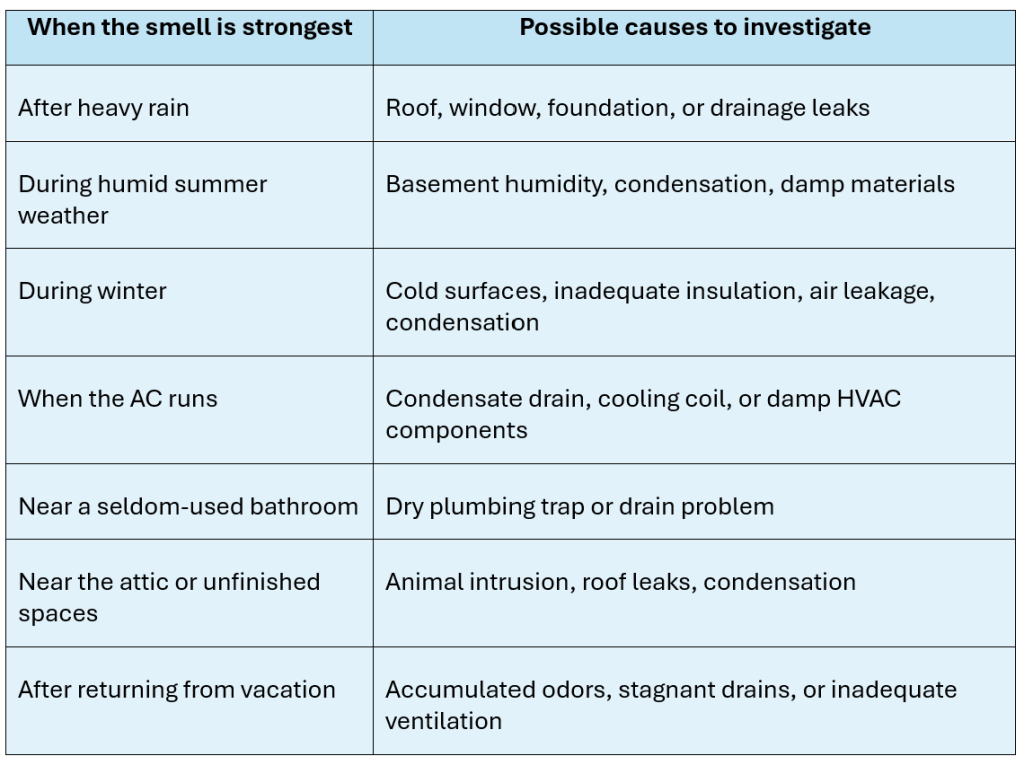
Step 3: Measure Humidity
Place inexpensive hygrometers in the affected areas.
Take readings at different times of day and under different weather conditions.
A normal room humidity reading does not rule out hidden condensation. A poorly insulated surface can still become damp even when the rest of the room feels comfortable.
Step 4: Look for Evidence of Moisture
Check for stains, discoloration, peeling paint, damp materials, and condensation.
A moisture meter may help identify suspicious areas, but readings require careful interpretation because different building materials can affect results.
Step 5: Bring in the Right Professional
If you cannot identify the source, consider hiring a specialist based on the clues you’ve collected.
- Building-performance or insulation specialist: Cold surfaces, condensation, insulation deficiencies, and air leakage
- Plumber: Suspected plumbing leaks or drain odors
- Pest specialist: Animal activity, nesting materials, and contamination
- HVAC specialist: Condensate problems and odors associated with heating or cooling equipment
- Waterproofing or drainage specialist: Basement water intrusion
- Qualified mold remediation professional: Significant or concealed mold contamination
Avoid opening walls or disturbing suspected mold or animal contamination without appropriate precautions.
7. Should You Test for Mold?
Many homeowners assume that a musty smell means they need a mold test.
However, the EPA generally recommends focusing first on finding and correcting moisture problems.
If visible mold is present, testing is often unnecessary to determine that cleanup is needed.
Testing also cannot, by itself, establish whether a home is safe or identify the underlying moisture source.
Professional assessment can be helpful when mold is suspected but cannot be located, when contamination is extensive, or when occupants have particular health concerns.
The most important steps are to correct the moisture source, remove contaminated materials when necessary, and properly clean and dry the affected area.
8. Preventing Musty Odors Before They Start
Routine maintenance can help prevent many odor problems.
Home Hero's Prevention Checklist
☐ Monitor humidity in basements and other damp areas.
☐ Maintain dehumidifiers and their drainage systems.
☐ Inspect accessible plumbing for leaks.
☐ Keep gutters and downspouts functioning properly.
☐ Investigate window and wall condensation.
☐ Clean bathroom exhaust fans and confirm they vent outdoors.
☐ Maintain HVAC filters and condensate drainage.
☐ Inspect attics and unfinished spaces for signs of animal activity.
☐ Store moisture-sensitive materials away from damp surfaces.
☐ Address water intrusion promptly rather than waiting for an odor to develop.
Final Thoughts: Follow Your Nose, but Look for the Cause
A stale or musty odor is your home’s way of telling you that something may need attention.
The source might be as simple as a damp cardboard box or an unused plumbing drain. Or it might indicate hidden condensation, animal contamination, or a moisture problem that could damage your home over time.
Don’t just cover up the smell. Use it as an opportunity to investigate, identify the underlying cause, and protect your home from more expensive problems down the road.
Protect your home, your family, and your wallet.
Talk to us
Have any questions? We are always open to talk about your home and how we can help you.