WATER
MANAGEMENT
Outdoor Water Management and Dry Basements
If you want a dry basement, water management outside your home is critical.
Most basement water problems start at the foundation and move inward.
Many homes already have several outdoor water-management systems in place, but they only work if they are correctly designed and maintained.
Gutter Outlets and Downspouts
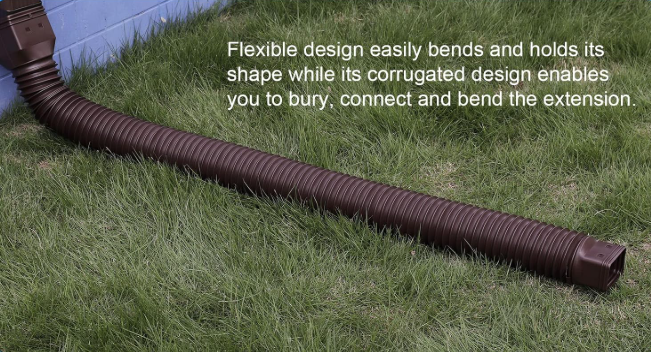
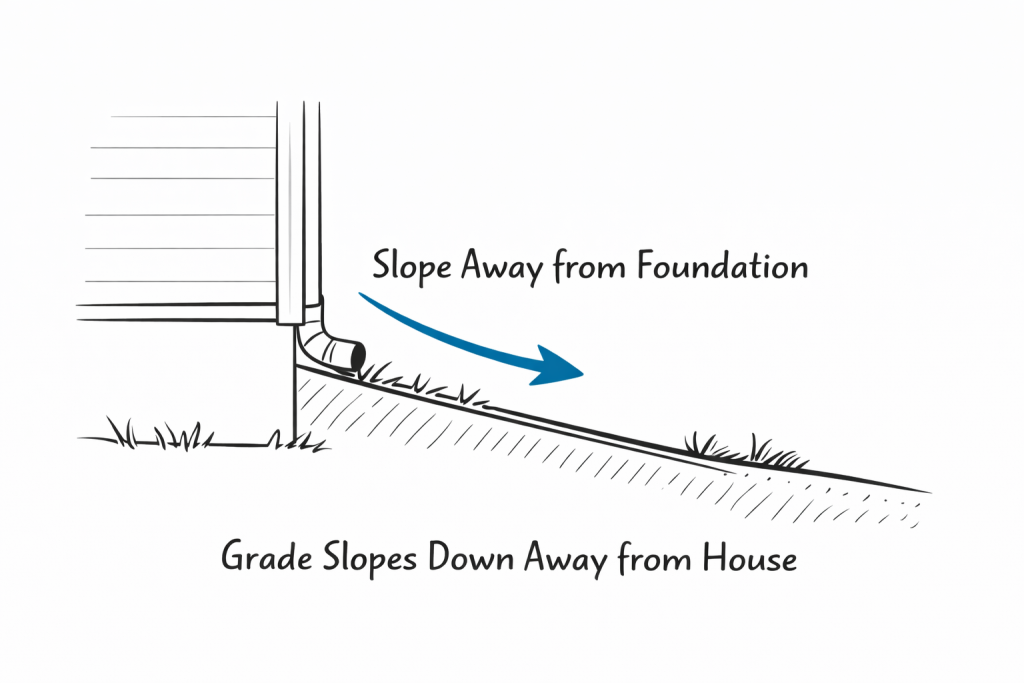
Downspouts must discharge rainwater at least 3 feet away from the foundation, and ideally downhill. Add extensions or diverters as needed. Short or missing extensions are one of the most common causes of basement moisture.
Drywells
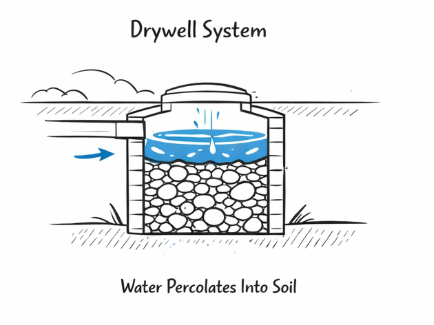
Many jurisdictions require drywells for new construction to temporarily store roof runoff and allow it to slowly percolate into the soil. These systems are designed so that post-construction runoff matches pre-construction conditions.
Drywells often include an overflow outlet near the top. This outlet must remain clear of dirt, mulch, and leaves for the system to function properly.
French drains
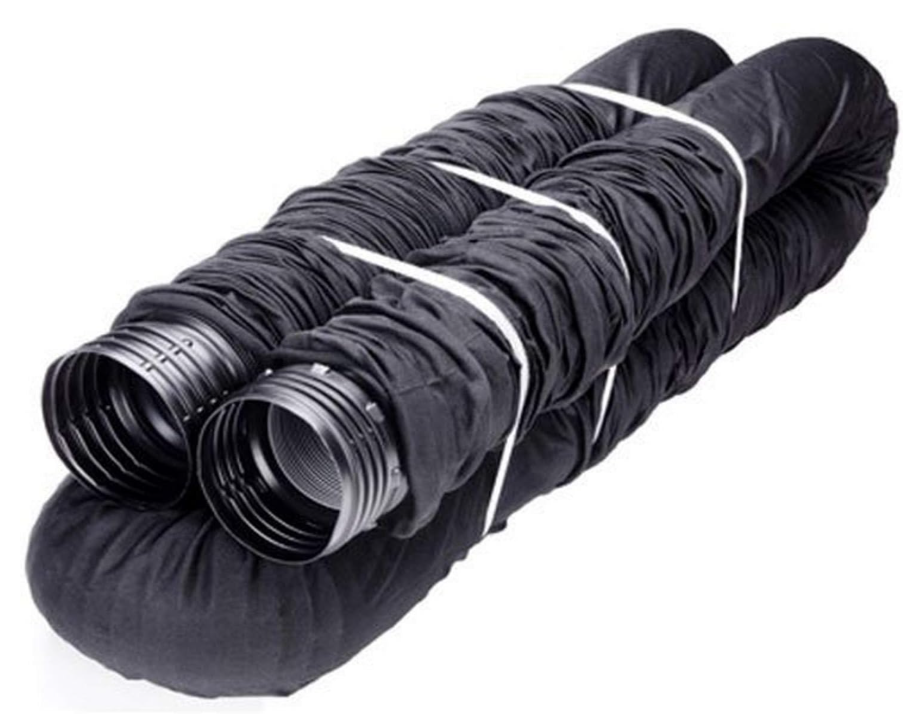
Homes are often protected by exterior French drains, frequently installed on the uphill side of the foundation. These drains collect surface water and rising groundwater and redirect it to a downhill outlet.
The outlet point must remain open and unobstructed. A buried or clogged outlet renders the entire system ineffective.
Driveway and Garage Trench Drains
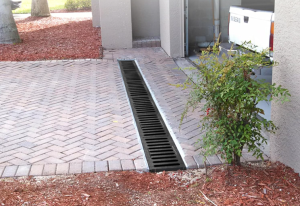
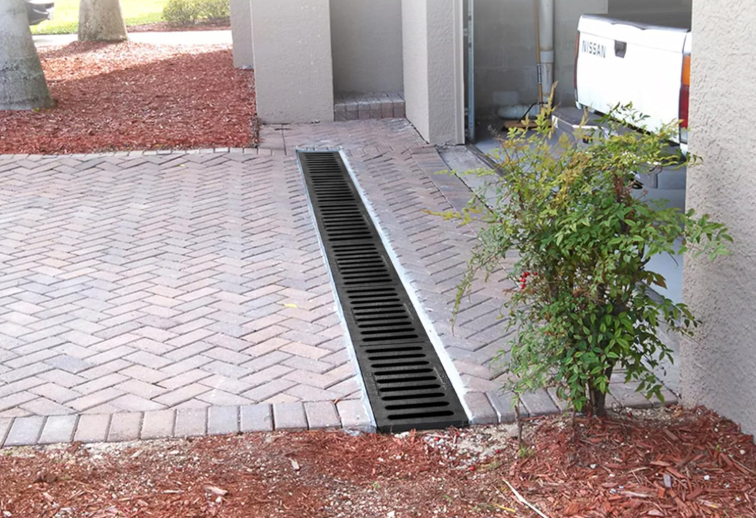
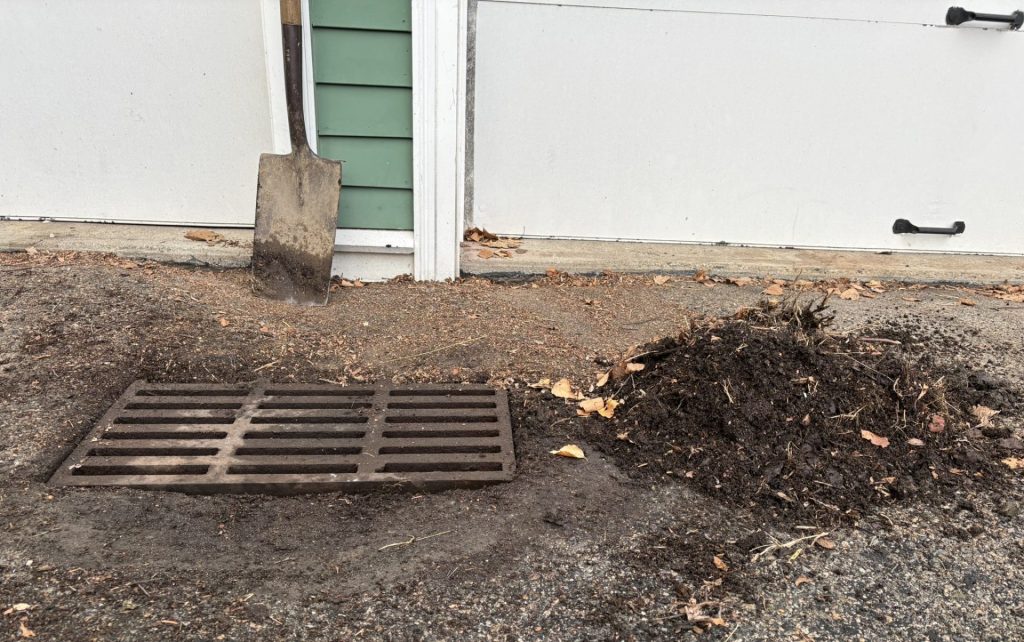
If your driveway slopes toward your garage, there is usually a trench drain or catch basin designed to intercept water before it flows inside. These drains require routine cleaning to remove leaves, sand, and debris.
Soil Grading around Foundation
The ground around your home should slope away from the foundation. Settling soil or landscaping changes can create negative grading that funnels water directly toward the basement walls.
Window Well Drains
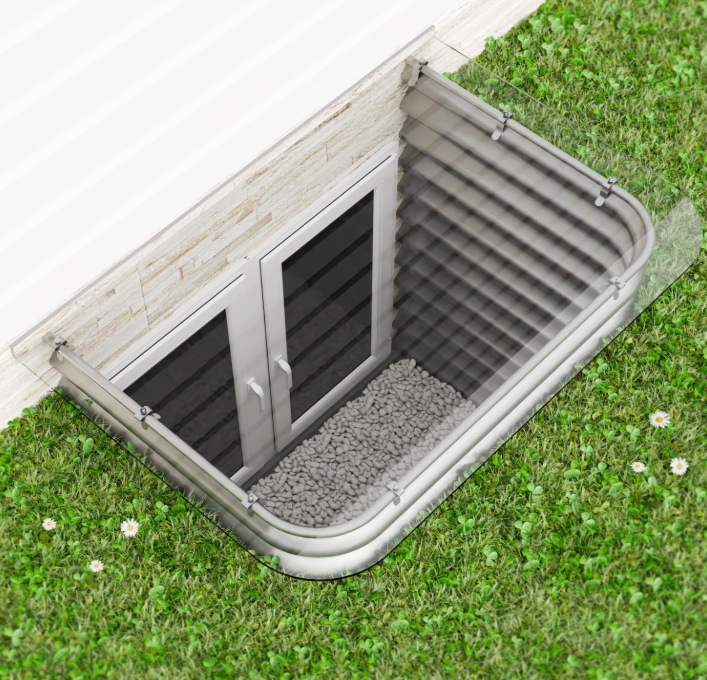
Basement window wells should include drains connected to a drywell or footing drain. Clogged window well drains are a common source of basement leaks during heavy rain. Installing a properly fitted window well cover helps keep out leaves, snow, ice, and debris, reducing the risk of drain blockage while still allowing light and emergency egress.

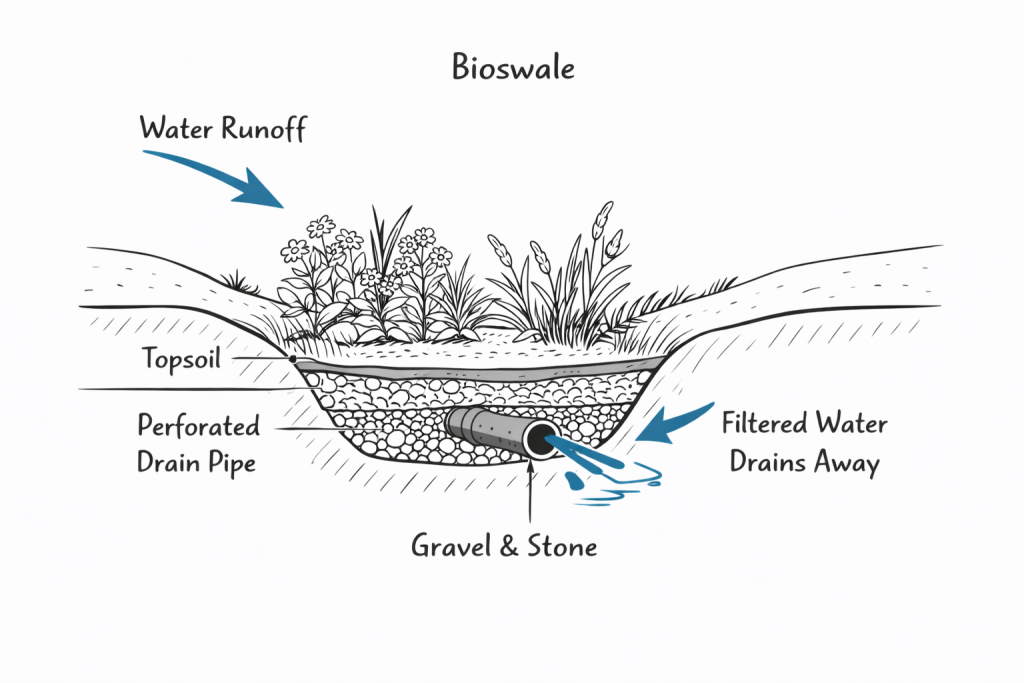
Swales and Surface Drainage Paths
Shallow channels, sometimes barely visible, are designed to guide water across the yard and away from the home. These can become blocked or filled in over time.
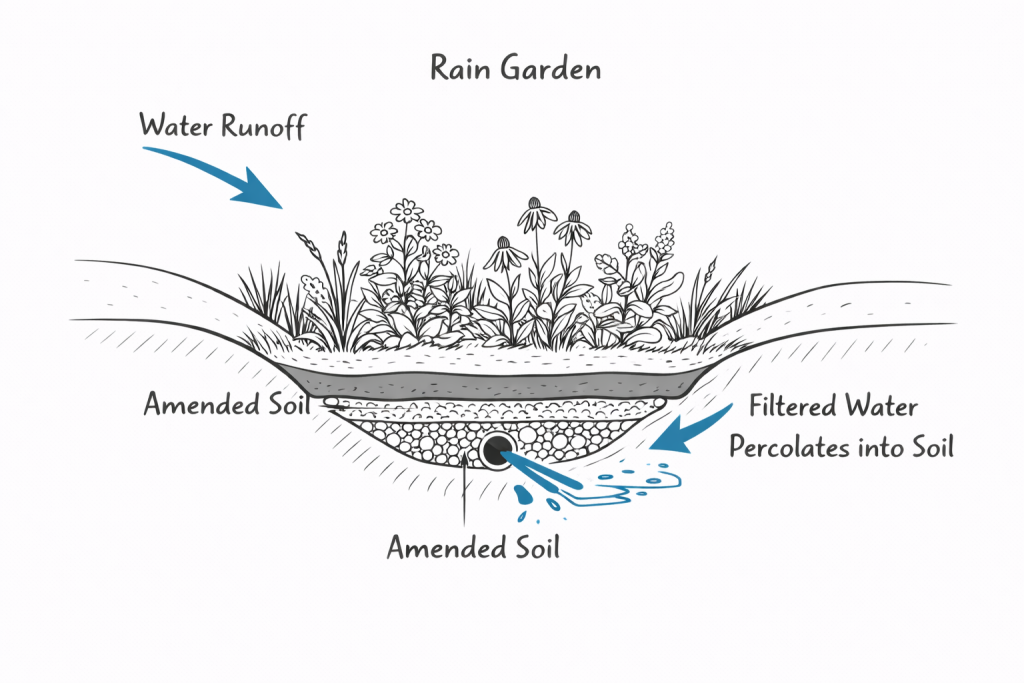
Rain Gardens and Infiltration Areas
Some homes manage runoff using planted depressions designed to absorb and slow stormwater. These must stay lower than the surrounding grade and free of sediment buildup.
Talk to us
Have any questions? We are always open to talk about your home and how we can help you.