
HOME HERO
Water Main Shut-Off Upgrade
Water Main Shut-Off Upgrade Deep Dive
You are considering replacing your existing water main shut-off valve and want to learn more.
Read on to learn:
You are considering replacing your existing water main shut-off valve and want to learn more.
Rest easy, Richard Trethewey of Ask This Old House will explain the process.
Thank you to Ask This Old House for this excellent video – How to Replace a Main Shutoff Valve
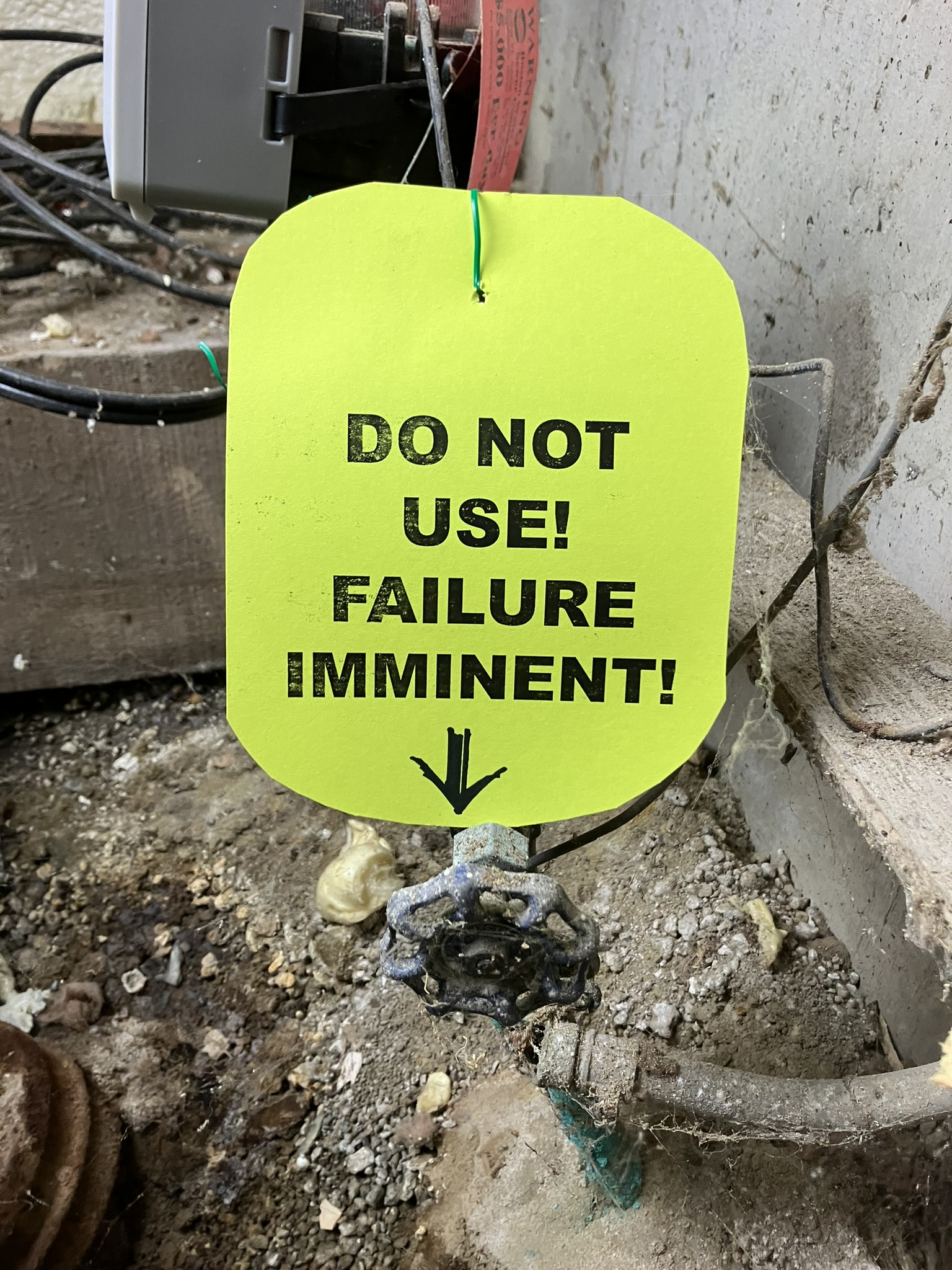
60 year old water main gate valve
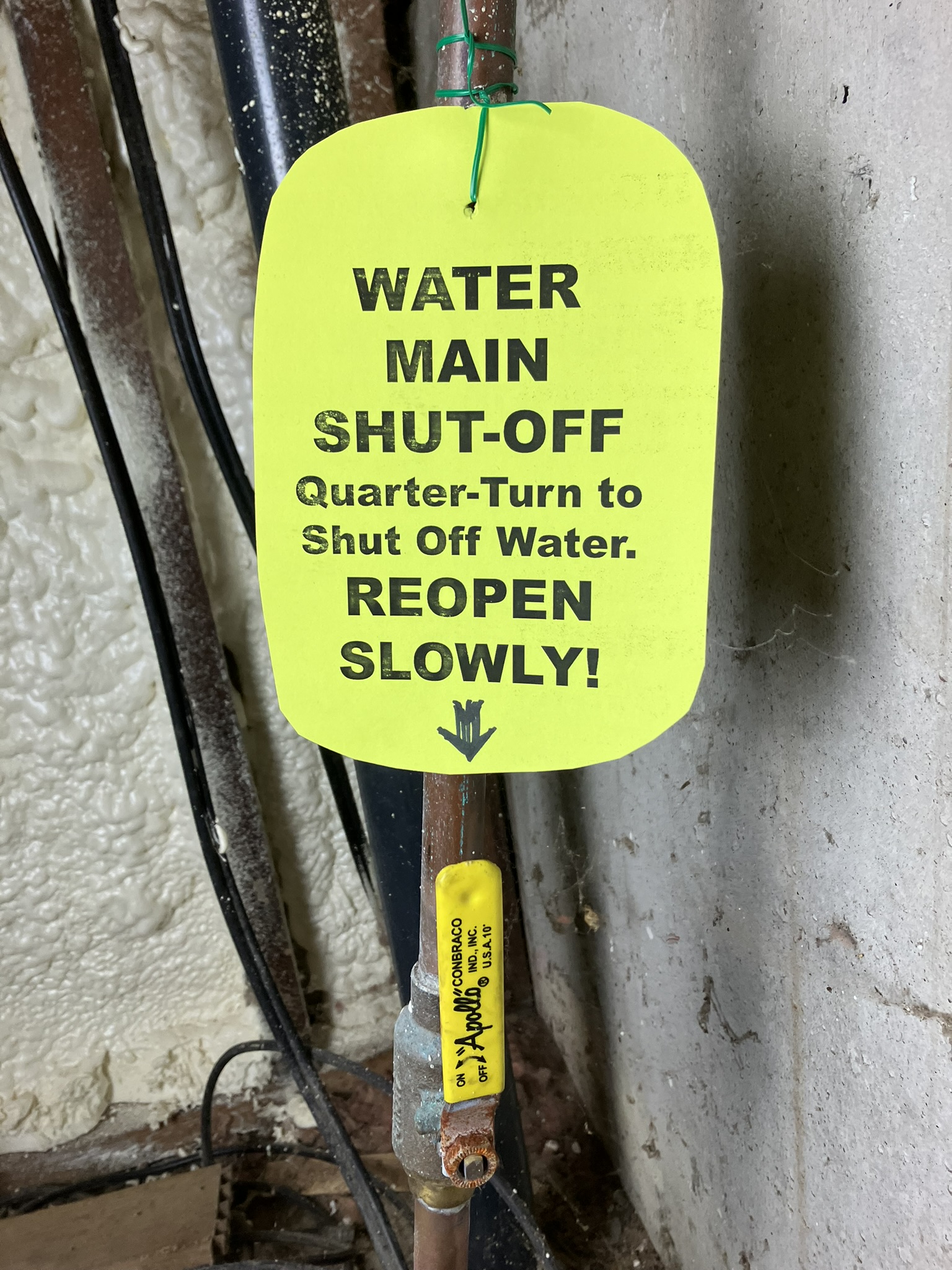
For a less expensive option than completely replacing the existing gate valve, your plumber can install a ball valve next to the old gate valve. The plumber would shut off the existing gate valve (crossing their fingers that the valve does not fail or leak) and add a ball valve on the downstream side. Then the plumber would carefully reopen the gate valve (more crossed fingers).
From that point forward, no one should ever touch the gate valve again and the quarter-turn ball valve is used exclusively. This strategy would eliminate the need to have your plumber twiddle their thumbs (costing at least $100/hour) while the water department comes to shut off your water at the street, however you risk the existing gate valve failing or developing a leak in the process.
Consider adding clear signage to make is easy for anyone shutting off the water in a panic to use the correct valve.
Smart Automatic Water Shut-Off Valves
Does the idea of hundreds of gallons of water spewing over all your home and belongings terrify you? Is your home unoccupied for part of the year? If so, consider installing a “smart” automatic water main shut-off valve to automatically shut-off your water in case of a leak or burst pipe. You will have peace of mind and your home insurance company may lower your home insurance rates after this device is installed.
Once again Richard Trethewey, on Ask This Old House, has great insight to share.
Thank you to Ask This Old House for this excellent video – Testing Smart Automatic Water Shutoff Valves
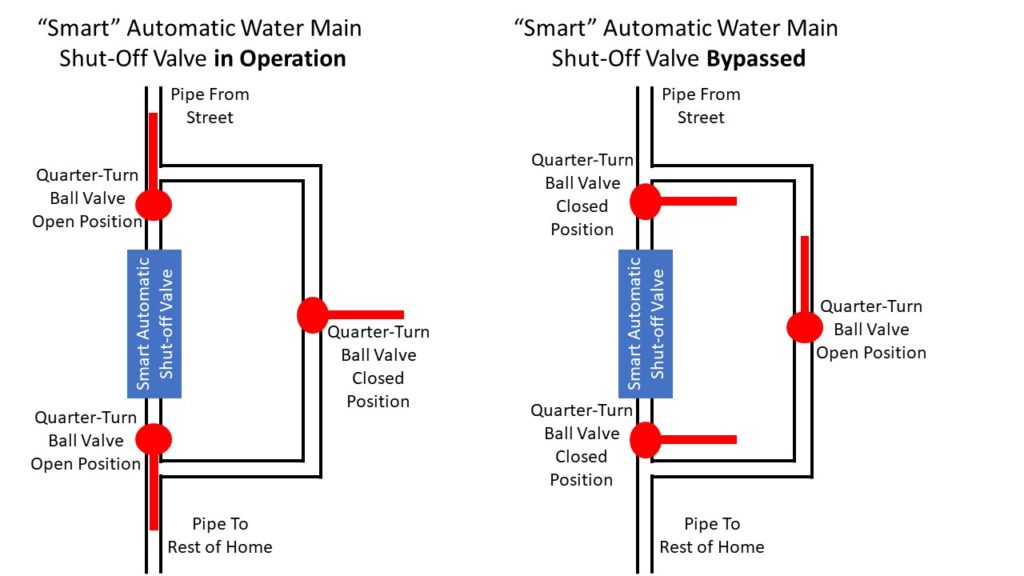
If you hire a plumber to install a “smart” automatic shut-off valve, show your plumber the piping plan diagram below. This layout will be slightly more expensive but it will allow the “smart” valve to be easily isolated and bypassed so your home will still have water if the smart valve needs to be serviced or replaced in the future.
Article:
Comprehensive Water Damage Prevention
A somewhat expensive investment in MASSIVE peace of mind
About one quarter of all home insurance claims are related to water damage. Fortunately, there are practical tools that can dramatically reduce both the risk and the cost.
Many modern alarm systems include water sensors. In our home, we have water sensors behind every toilet, inside every sink cabinet, under the dishwasher, behind the washing machine, and beneath the water heater.
These sensors paid for themselves many times over when one alerted me to a failed water ejection pump behind our washing machine. Without that alert, several weeks could have passed before the problem was discovered, likely causing damage to the floor and to belongings stored nearby. Instead, we were able to stop the washing machine immediately, clean up a small amount of water, and hire a plumber to replace the pump right away.
Another water-related wake-up call came when Boston Water and Sewer contacted us to report that one of our toilets appeared to be running continuously. After some investigation, I discovered that the fill valve on our basement toilet had failed. That unnoticed leak increased our water bill by $400 in a single month.
At that point, I decided to invest in an automatic main water shutoff. There are less expensive options on the market, but many reviews raised concerns about durability and the need to replace the entire unit if something fails. I ultimately chose the FloLogic automatic shutoff.
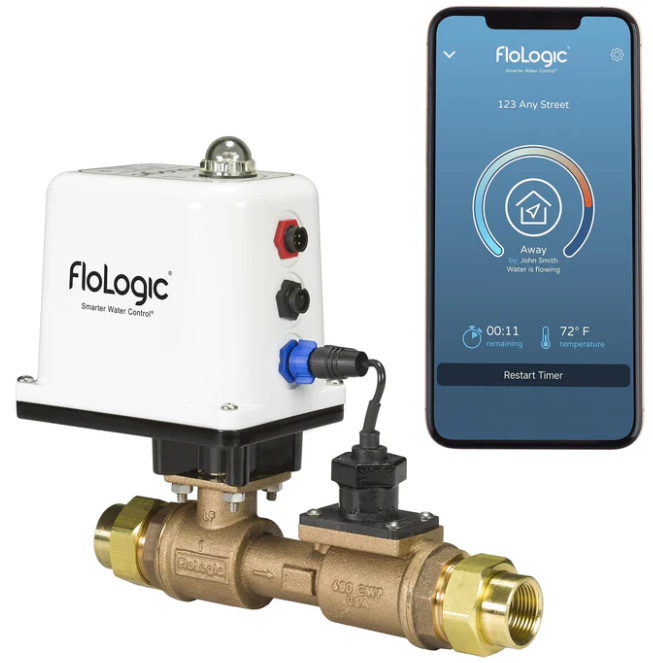
It was a significant upfront investment, but the system is built like a tank, and all components are serviceable and replaceable. I hired a plumber to install it and to add a bypass loop to our plumbing, allowing water to continue flowing if the unit ever needs service. I also hired an electrician to add a power outlet next to the unit.
Using the FloLogic app, you set a maximum amount of time that water can run continuously before the system shuts off the supply. In our home, that limit is set to 25 minutes. If I need to water the lawn or take an unusually long shower, I can temporarily extend the time through the app.
Within the first week, the system proved its value when it shut off the water after my youngest didn’t fully turn off the garden hose. Later that same month, it activated again when my oldest accidentally left the cold water running after a shower.
Over the past year, the system has shut off the water multiple additional times due to running toilets. One older toilet requires a bit of “finesse”. The other needed a fill-valve replacement.
Between the water sensors and the automatic shutoff, these systems have paid for themselves through water savings and avoided damage. However, the biggest benefit by far is the peace of mind that comes from knowing a small oversight will not turn into a catastrophic loss.
Talk to us
Have any questions? We are always open to talk about your home and how we can help you.